
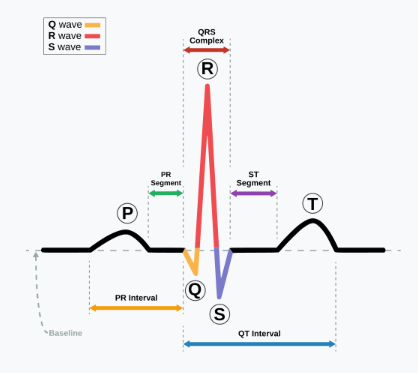
Electrocardiography is the process of producing an electrocardiogram (ECG or EKG[a]), a recording of the heart’s electrical activity through repeated cardiac cycles.[4] It is an electrogram of the heart which is a graph of voltage versus time of the electrical activity of the heart[5] using electrodes placed on the skin. These electrodes detect the small electrical changes that are a consequence of cardiac muscle depolarization followed by repolarization during each cardiac cycle (heartbeat). Changes in the normal ECG pattern occur in numerous cardiac abnormalities, including:
- Cardiac rhythm disturbances, such as atrial fibrillation[6] and ventricular tachycardia;[7]
- Inadequate coronary artery blood flow, such as myocardial ischemia[8] and myocardial infarction;[9]
- and electrolyte disturbances, such as hypokalemia.